
Smart Home Automation Cost in Frisco: 2026 Complete Pricing Guide
No obligation · We aim to respond within one business day
Complimentary phone consultation
Talk it through with a local designer. Written proposal before anyone books a crew.
No obligation · We aim to respond within one business day
Smart home automation in Frisco runs $5,000-$12,000 for basic one-room control and $15,000-$30,000 for standard whole-home work. Most 3,000-4,500 sq ft houses land at $15,000-$35,000 when lighting, climate, audio/video, security, and shades share one controller. Scope, rooms, wiring, equipment tier, and programming set the number. Ranges are for planning; your written proposal follows a site visit.
Lighting, shade, audio, and network jobs that stand alone have their own cost pages; this page prices the controller job that ties those systems together.
How much does a full-home setup with voice control cost?Link to this section
A full-home job with smart devices and voice control is the Standard Whole-Home through Premium Integration band: $15,000-$30,000 if lighting, climate, shades, and a basic voice layer cover most rooms, and $30,000-$50,000 when scenes, more voice coverage, and energy logic are in the brief. Estate work that adds pools, gates, and grounds sits at $50,000-$100,000+.
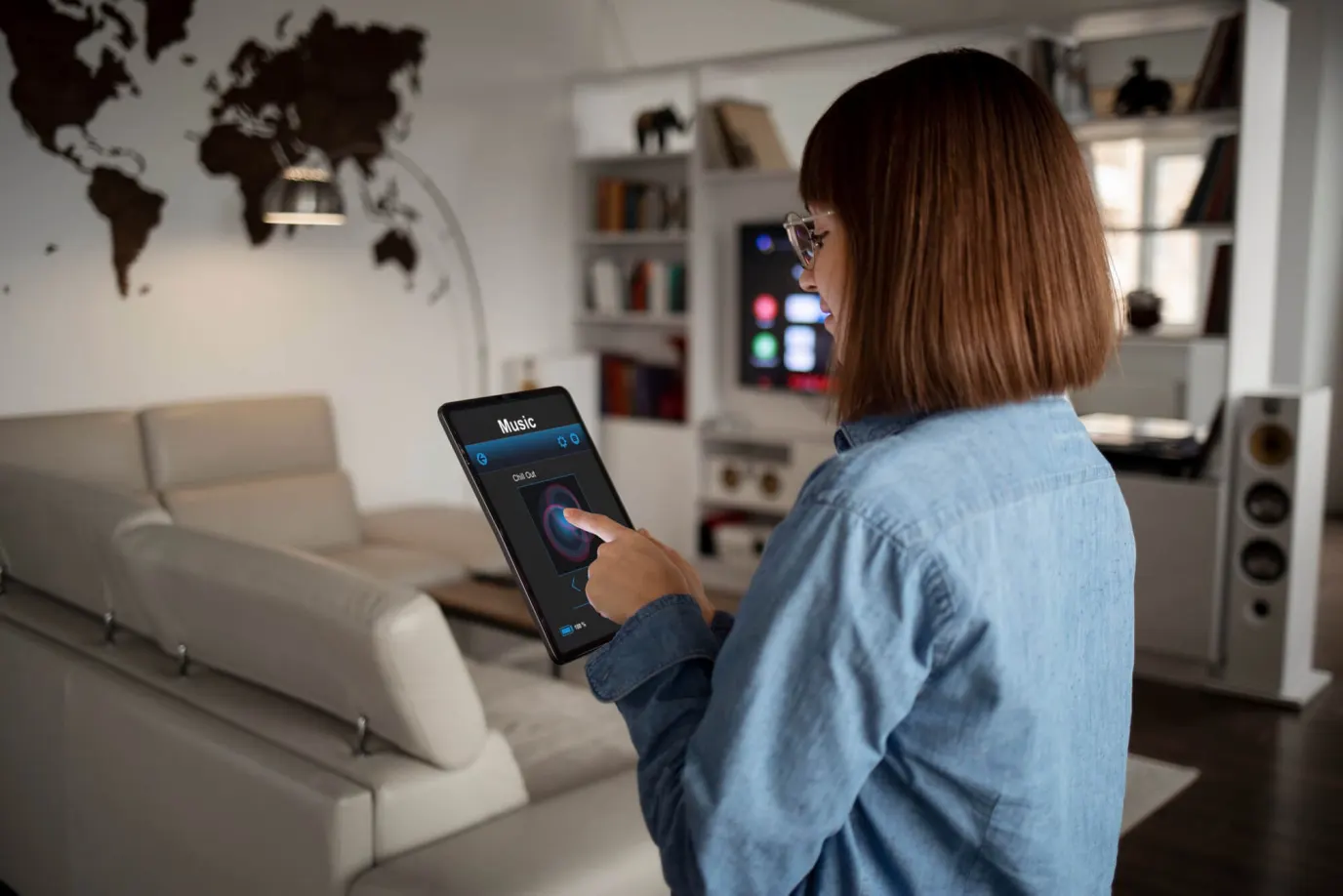
Voice is a layer, not the house. Control4 sells a closet controller plus app, touchscreen, keypad, and voice on one interface. A handful of Echo or Google speakers on Matter-certified bulbs is a different product. Matter is an IP protocol so compatible gadgets can talk across brands; it does not replace a programmed controller. For microphone placement and Alexa versus Josh.ai, use the whole-home voice guide.
Voice-layer costs: Amazon Alexa or Google Assistant $500-$1,500; Apple HomeKit/Siri $800-$2,500; Josh.ai $3,000-$8,000; custom Alexa work $1,500-$4,000. Coverage adders: reuse speakers you already own $500-$1,000; six to twelve consumer speakers $1,000-$2,500; in-ceiling mics $2,000-$5,000; a Josh.ai whole-home package $5,000-$12,000.
Choose a consumer voice stack if you already live in Alexa or Google and you only want lights, a thermostat, and locks. Choose a programmed controller if Goodnight has to lock doors, drop shades, and set back HVAC from one button, and keep working when the wide-area internet is down. A controller that lives in your equipment closet keeps those scenes running when the internet does not.
Complimentary phone consultation
Curious what lighting, shades, or whole-home control would feel like in your house?
Describe the rooms and the routines you want. A complimentary phone consultation is the first step — no obligation.
No obligation · We aim to respond within one business day
What do the planning ranges look like by scope?Link to this section
The worked examples below are itemized briefs, so their totals can sit outside the scope table's ranges.
| Automation level | Systems in the brief | Planning range | On-site window | Fits this job if |
|---|---|---|---|---|
| DIY smart devices | Lights, thermostat, locks | $1,000-$3,000 | DIY weekend | You will maintain the apps yourself |
| Basic professional | Lighting, climate, security | $5,000-$12,000 | 3-5 days | Main rooms only |
| Standard whole-home | Full lighting, AV, climate, shades | $15,000-$30,000 | 5-10 days | Most of the house, one interface |
| Premium integration | Advanced scenes, voice, energy | $30,000-$50,000 | 10-15 days | More logic and more rooms |
| Estate automation | House plus pools, gates, grounds | $50,000-$100,000+ | 3-6 weeks | Multiple buildings or grounds |
Neighborhood planning bands: Hollyhock or Richwoods $15,000-$25,000; Phillips Creek Ranch $25,000-$40,000; Starwood $35,000-$60,000; Frisco Hills $60,000-$120,000+. Larger custom houses pull more keypads, shade pockets, and HVAC zones.
Example: the Essential line-item stack below adds to $14,000. The Complete line-item stack adds to $54,000: it carries 12 shades, eight audio zones, and four touchscreens.
| Essential example line | Planning range |
|---|---|
| Control4 EA-1 controller | $1,500 |
| Lutron lighting (30 devices) | $3,000 |
| 2 Ecobee thermostats | $600 |
| 4 Schlage smart locks | $1,200 |
| Security integration | $1,500 |
| Network infrastructure | $1,500 |
| Professional installation (4-5 days) | $3,500 |
| Programming and training | $1,200 |
| Sum of these rows | $14,000 ($1,500 + $3,000 + $600 + $1,200 + $1,500 + $1,500 + $3,500 + $1,200) |
| Complete example line | Planning range |
|---|---|
| Control4 EA-3 or EA-5 | $3,500 |
| Complete Lutron lighting (50 devices) | $6,000 |
| Motorized shades (12 windows) | $10,000 |
| Multi-zone climate (3-4 thermostats) | $1,200 |
| Whole-home audio (8 zones) | $8,000 |
| Security and cameras | $3,500 |
| Entry (6 locks + 2 garage openers) | $2,000 |
| Network infrastructure | $4,000 |
| 4 touchscreen interfaces | $3,000 |
| Professional installation (10-12 days) | $9,000 |
| Advanced programming | $3,800 |
| Sum of these rows | $54,000 ($3,500 + $6,000 + $10,000 + $1,200 + $8,000 + $3,500 + $2,000 + $4,000 + $3,000 + $9,000 + $3,800) |
Premium highlight rows, kept as line items: central control $5,000-$8,000; complete lighting $10,000-$15,000; all motorized shades $20,000-$35,000; premium audio/video $15,000-$25,000; Josh.ai voice $5,000-$8,000; enterprise network $6,000-$12,000; pool and grounds $4,000-$8,000; installation and programming $18,000-$30,000. Those eight ranges add to $83,000-$141,000.
Estate highlight rows: central equipment $10,000-$20,000; lighting $20,000-$40,000; all shades $40,000-$80,000; complete AV $25,000-$50,000; voice $8,000-$15,000; network $15,000-$30,000; outdoor systems $15,000-$30,000; installation $35,000-$70,000. Those eight ranges add to $168,000-$335,000.
One worked house: a 3,800 sq ft Phillips Creek Ranch brief with complete lighting, shades in the main rooms, whole-home audio, and security runs $32,000-$48,000.
What actually drives the price?Link to this section
Five things move the number: how much of the house is in scope, how many systems share the controller, whether walls are open, which equipment tier you pick, and how much custom logic you want written. The quote is a floor-plan map of lighting loads, shade pockets, HVAC zones, and the controller.
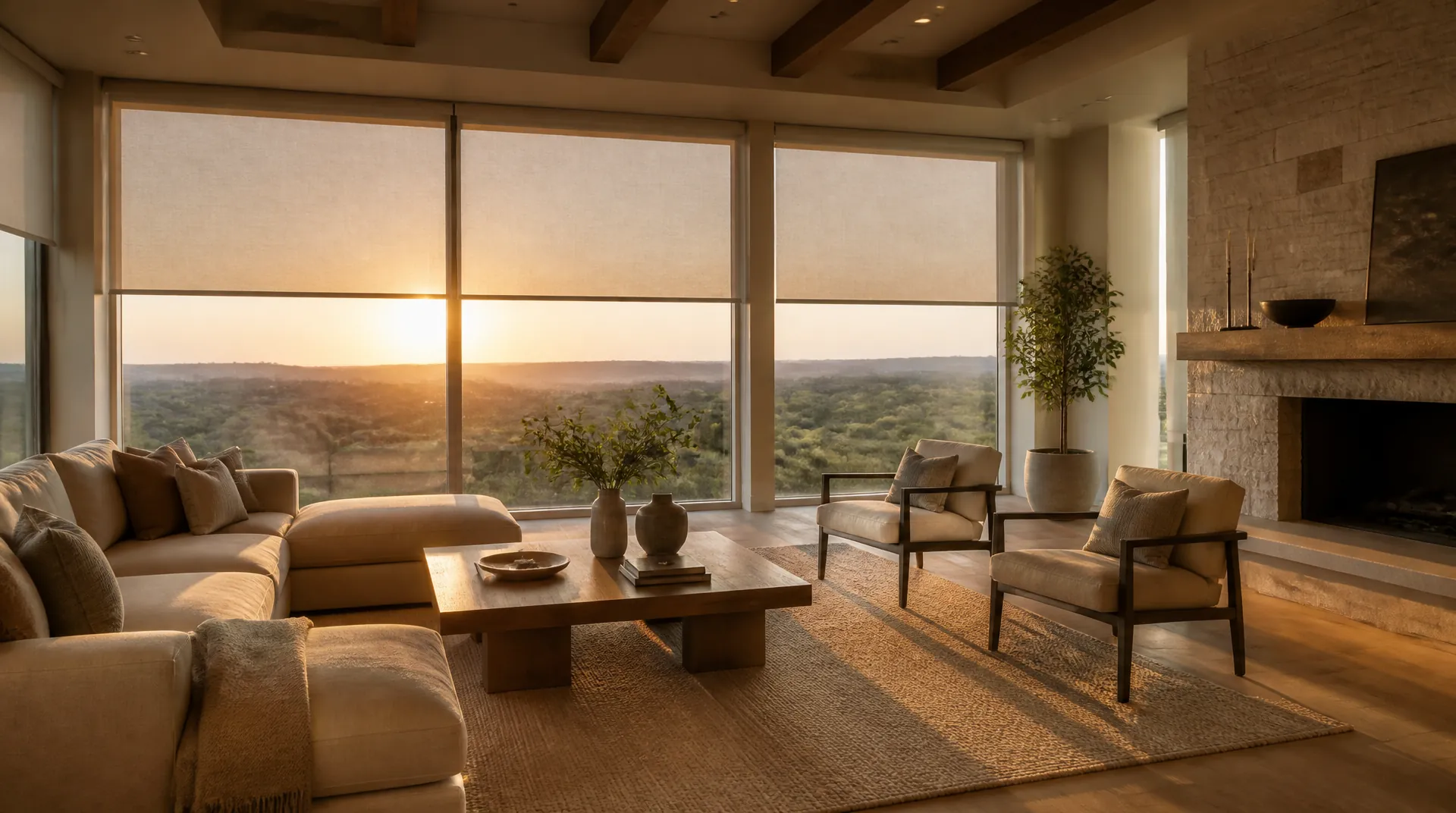
West glass in a Frisco family room is a shade and HVAC problem before it is an app problem. Shade-only pricing lives on the motorized shade cost guide.
| Coverage | Rooms | Typical devices | Equipment | Installation | Sum of those two columns |
|---|---|---|---|---|---|
| Single room | 1 room | 10-20 | $3,000-$5,000 | $1,500-$3,000 | $4,500-$8,000 |
| Primary areas | 4-6 main rooms | 30-50 | $8,000-$12,000 | $4,000-$7,000 | $12,000-$19,000 |
| Most of home | 8-12 rooms | 60-100 | $12,000-$20,000 | $7,000-$12,000 | $19,000-$32,000 |
| Complete home | 12-20 rooms plus outdoor | 120-200 | $25,000-$45,000 | $12,000-$20,000 | $37,000-$65,000 |
| Estate | 20+ rooms, guest houses | 250-500+ | $50,000-$100,000+ | $25,000-$50,000+ | $75,000-$150,000+ |
Controller-tier costs that sit beside the platforms: Control4 $2,500-$8,000; Savant $4,000-$12,000; Crestron $8,000-$25,000; Lutron-led lighting jobs $1,500-$5,000; Josh.ai $3,000-$8,000. EA-series line items used in the examples: EA-1 $1,500, EA-3 $2,500, EA-5 $4,000, EA-7 $6,500. Savant runs lighting, climate, music, and video on one system. Crestron Home is the residential operating system. Control4 is the closet controller in the Essential and Complete examples.
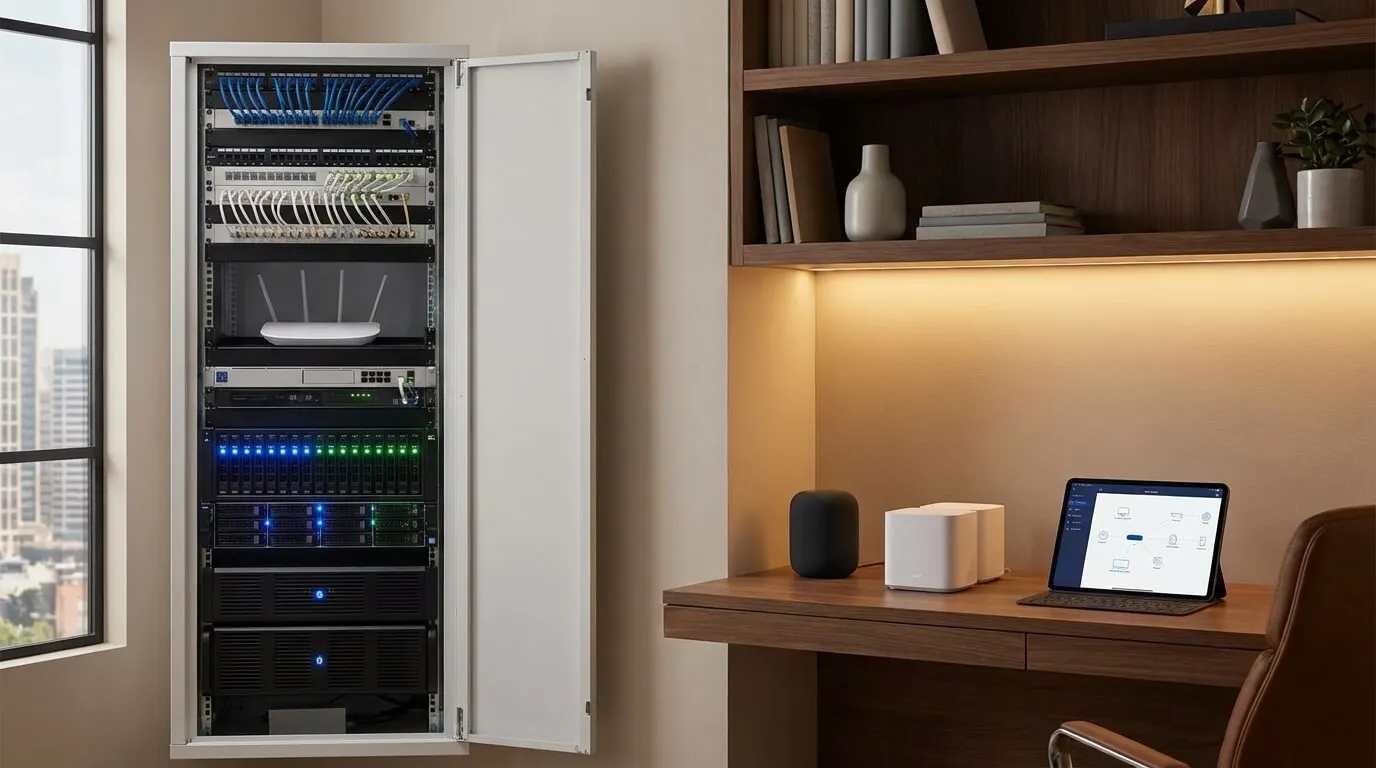
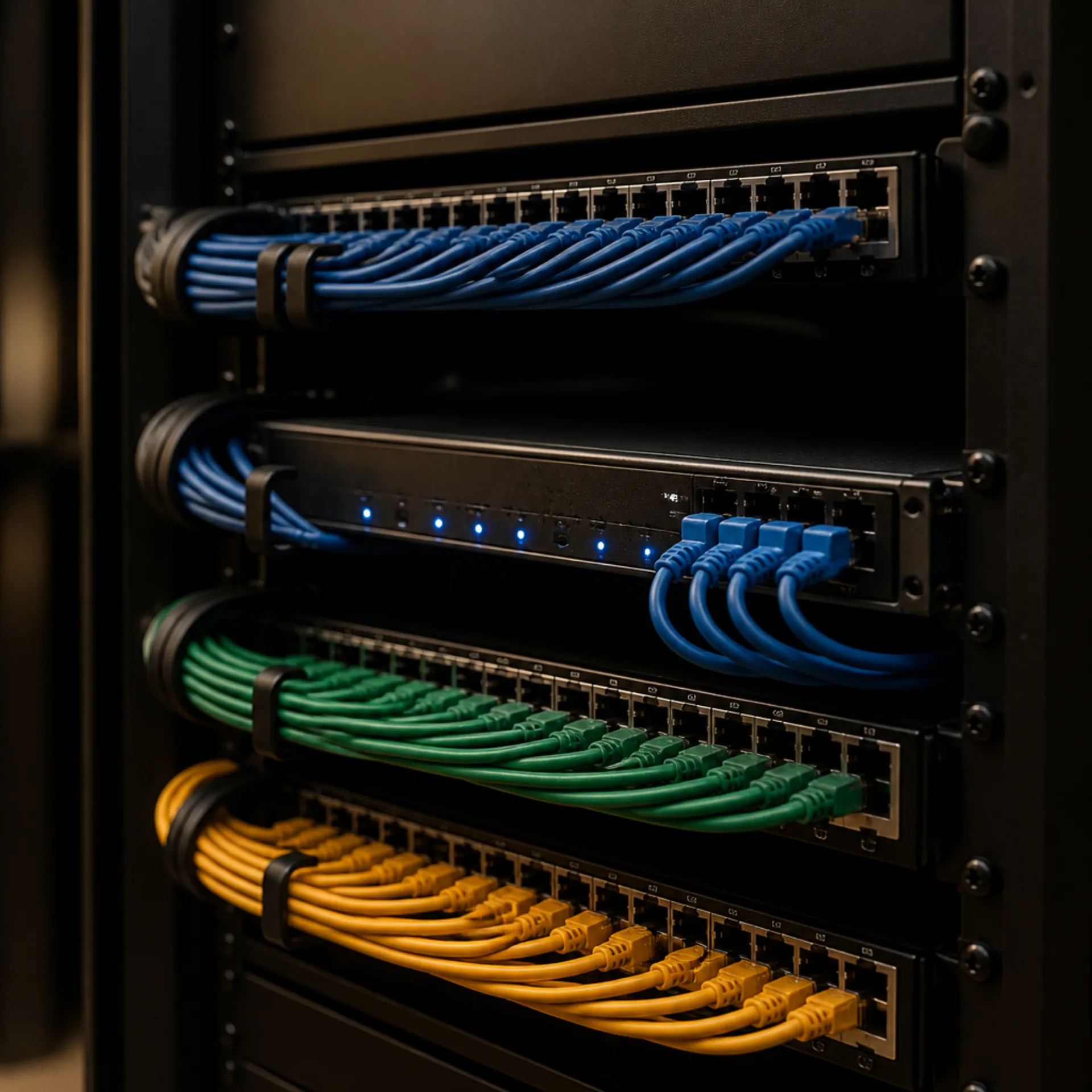
Plan a short wired backbone for the controller and network so those pieces do not depend on Wi-Fi. Network costs: managed switch $300-$1,200; Wi-Fi 6E access points $300-$600 each; rack $500-$2,000; UPS $400-$1,500; CAT6A $150-$300 per run; fiber backbone $2,000-$5,000. By house size: under 3,000 sq ft $2,500-$5,000; 3,000-5,000 sq ft $5,000-$10,000; 5,000-7,000 sq ft $8,000-$16,000; 7,000+ sq ft $16,000-$32,000+. Brand stacks: Ubiquiti UniFi $2,000-$8,000; Pakedge/Luxul $4,000-$12,000; Ruckus $6,000-$15,000; Cisco Meraki $8,000-$20,000+. Build the network first if the house already drops video calls. Detail lives on the smart-home network cost guide.
Programming costs: basic setup $1,000-$2,500; standard custom $2,500-$5,000; advanced $5,000-$10,000; premium custom $10,000-$20,000+; complex logic adds $2,000-$8,000. Support: pay-per-call $0 on the plan, then $150-$300 per visit; basic $300-$600 a year; standard $600-$1,200; premium $1,200-$2,500; concierge $2,500-$5,000+.
If the job adds a new 120 V circuit or opens finished walls, Frisco examines that work against the codes it has adopted, including the 2023 National Electrical Code with local amendments. Some replacements and minor electrical projects can go through self-service residential permits. Do not guess the fee; the city's Plans and Permits portal is where that application lives. On a new build, keypad boxes and shade pockets are cheap during framing and expensive after paint. Sequence for a framed house is on the pre-wire guide.
Which systems are worth paying for first?Link to this section
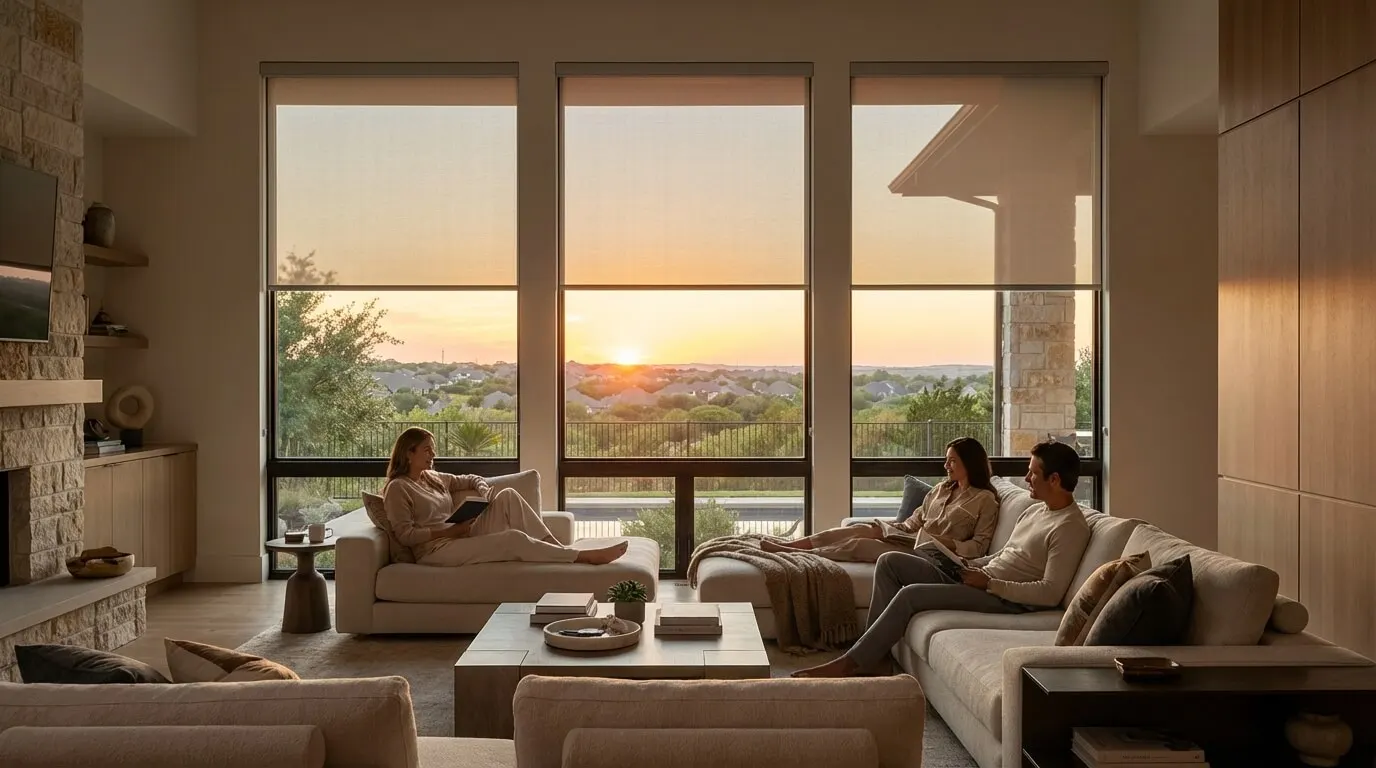
Pay for the system that removes a daily friction. Lighting is first on most Frisco jobs because you use it every night. West-glass shades are next when the room is unusable in late afternoon. Climate is cheap if the thermostat is still a paper clock. Audio, pool, and gates wait until lights and shades already behave.
| System | Integration range | Pay for this first if | Wait if |
|---|---|---|---|
| Lighting control | $3,000-$12,000 | You want scenes, not a drawer of dimmer apps | Only two rooms matter; start there |
| Climate (HVAC) | $800-$2,500 | The thermostat still has a 7-day paper clock | You already run an ENERGY STAR unit you like |
| Motorized shades | $5,000-$25,000 | West or two-story glass you will not pull by hand | The opening is small, north, and easy to reach |
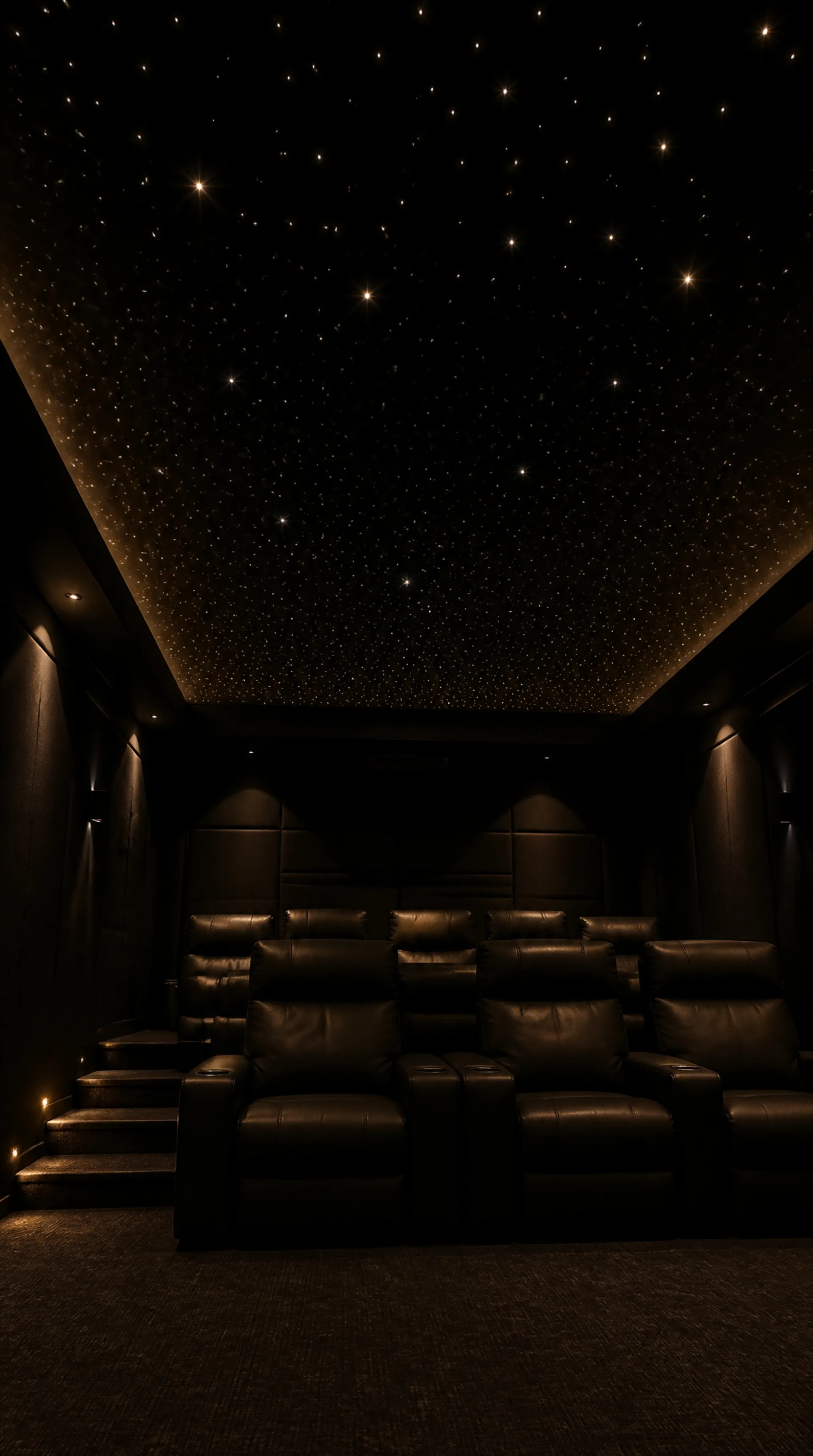
| Audio/video | $2,000-$15,000 | Music and TV must follow you by room | One TV is the whole brief; use the theater cost page |
| Security system | $1,500-$5,000 | The alarm should arm with Goodnight | Cameras-only; use the security cost page |
| Door locks | $500-$2,000 | The keypad lock is part of Away | One lock and a phone app is enough |
| Garage doors | $300-$800 | The opener should sit on the same scene | The car remote is fine |
| Pool/spa | $1,500-$4,000 | The pool pack already talks to the controller you picked | The pool pack is a closed proprietary box |
| Irrigation | $800-$2,000 | You want weather and Away on one schedule | The existing timer is enough |
| Yard lighting | $2,000-$8,000 | The yard is part of Entertaining | A photocell already does the job |
| Entry gates | $1,200-$3,500 | The house sits behind a gate you want on the same keypad | The community gate is not yours to program |
Phase ranges if you split the work: Phase 1 $12,000-$20,000 (controller, network, main lighting); Phase 2 $8,000-$15,000 (shades and security); Phase 3 $10,000-$18,000 (distributed AV and outdoor). Pre-wire in Phase 1 if you know Phase 3 is coming. Running cable later is the expensive path.
Lighting device costs: basic on/off $60-$120; dimmer $80-$150; 6-button keypad $250-$400; fan control $100-$180; Pico remote $40-$80; motion sensor $80-$150. Per-device by brand: Lutron RadioRA 3 $60-$150; Control4 lighting $80-$180; Savant lighting $100-$250; Crestron $120-$300. By floor area: 2,000-3,000 sq ft $4,000-$8,000 (equipment $2,500-$5,000, install $1,500-$3,000); 3,000-4,500 sq ft $6,500-$13,000 (equipment $4,000-$8,000, install $2,500-$5,000); 4,500-6,000 sq ft $10,000-$19,000; 6,000+ sq ft $16,000-$32,000+. A typical Frisco house has 30-60 switches, or $5,000-$12,000 of the lighting line. Skip rooms you will never put on a scene. Each switch you leave alone saves $100-$200.
Shade costs per opening: basic roller $500-$900; premium roller $800-$1,500; cellular $700-$1,300; wood blinds $900-$1,800; drapery track $1,200-$3,000; exterior solar screen $1,500-$3,500. Coverage: primary living 8-12 windows $6,500-$13,000 (equipment $5,000-$10,000 plus install $1,500-$3,000); main floor 15-25 windows $13,000-$25,000; entire home 30-50 windows $25,000-$50,000; estate 50-100+ windows $50,000-$100,000+. Custom-treatment adder $2,000-$8,000. Lutron's roller-shade page lists a Caséta DIY shade up to 8 ft wide and a Sivoia 64 drive for up to 64 sq ft of fabric. A north powder-room window you can pull by hand is not worth a motor.
Hidden costs: electrical work $1,500-$5,000 (neutral at a box $50-$150, extra circuit $300-$800, equipment-room circuit $500-$1,500, outdoor GFCI $150-$300, whole-home surge $800-$2,000); replacing incompatible devices $500-$3,000 (flickering LEDs $200-$600, a fan $300-$800, a fixture $200-$1,000, a thermostat $400-$1,200); shade customizations $100-$300 fabric upgrade, $50-$150 blackout lining, $500-$1,500 exterior screen, $1,000-$3,000 arched opening, $2,000-$5,000 two-story drapery; extra interfaces $1,000-$5,000 (touchscreen $600-$1,200, keypad $250-$400, handheld $300-$800, in-wall voice speaker $300-$600); energy monitor $1,200-$3,500 (whole-home $800-$2,000, circuit-level $1,500-$3,000, solar tracking $500-$1,500, extra energy logic $800-$2,000); furniture and finish work $500-$5,000 (rack millwork $1,000-$4,000, hiding keypads $500-$2,000, finish color $200-$800, concealment $500-$3,000). Power-outage adders: UPS $800-$2,000; whole-home generator $8,000-$15,000.
Rule of thumb, shown: pick one coverage row and add the system rows you actually want, then compare that sum to the scope table. Example: primary-area equipment and install $12,000-$19,000, plus climate $800-$2,500, plus locks $500-$2,000, plus garage $300-$800. Low end $12,000 + $800 + $500 + $300 = $13,600. High end $19,000 + $2,500 + $2,000 + $800 = $24,300. That range overlaps the Standard whole-home row ($15,000-$30,000) in the scope table, which is why a written proposal still has to count devices in the room.
When is a store-bought stack enough?Link to this section
DIY is enough when the brief is a thermostat, a few bulbs, and a lock, and you will be the person who updates firmware. Lutron Caséta roller shades are sold as a DIY, wire-free shade up to 8 ft wide. An ENERGY STAR certified smart thermostat is a fair first buy. Certified thermostats must prove measured runtime savings under the certification criteria. Thermostat-only planning is on the smart thermostat guide.
Choose a programmed Control4 or Savant job if more than one system must share a scene, if you want wall keypads the whole family will use, or if the house is large enough that consumer Wi-Fi and a pile of apps become the support plan. Choose DIY if the budget is under $10,000, the house is small, and you like troubleshooting. If lights are the entire brief, price a Lutron lighting job ($1,500-$5,000 above). A second voice assistant on top of a working keypad system is usually not worth it. If you are stretching dollars, start with the budget smart-home page instead of this one.
- Walk every room and mark lights, shades, HVAC zones, locks, and TVs you actually want on a scene.
- Note attic access, slab, and any wall you will not open. That decides wireless versus a pre-wire.
- Photograph the electrical panel and the network closet, or the place a closet could go.
- Decide whether voice is required or whether a keypad and the phone app are enough.
- List devices you will keep. A working ENERGY STAR thermostat does not need replacing for its own sake.
- If you will add a circuit or alter walls, open Frisco's residential permit page before anyone cuts drywall.
- Ask every bidder for a written, line-item proposal that names rooms, device counts, and programming, not a single lump sum.
Do other Texas cities use a different number?Link to this section
A buyer comparing Austin to Frisco is asking the same cost question. The drivers do not change: rooms, open walls versus finished walls, platform, and programming. The ranges here are Frisco planning figures, not an Austin bid. Labor and permit desks differ by city. Use the same checklist, then get a proposal measured in that house.
How is a written proposal produced?Link to this section
Digitalholics, founded in 2015 and working from the Plano office, starts with a complimentary phone consultation. After that, someone walks the rooms, counts loads, and writes a line-item proposal. A finished-house retrofit is done one room or one floor at a time so working lights stay up.
Start on the smart home automation service page or contact us.
SourcesLink to this section
- Control4 smart home platform
- Savant home automation and power
- Crestron Home
- Lutron roller shades
- Josh.ai
- Connectivity Standards Alliance Matter
- ENERGY STAR smart thermostats
- ENERGY STAR smart thermostat key product criteria
- NWS Fort Worth 1991-2020 climate normals
- Starwood, Frisco
- City of Frisco adopted codes
- City of Frisco residential permits
- City of Frisco Plans and Permits
Complimentary phone consultation
Ready to see how it would work in your home?
Start with a complimentary phone consultation. We map the rooms, the scenes you would actually use, and what integrates with what — then a written, line-item proposal before anything is scheduled.
No obligation · We aim to respond within one business day