
How to Improve Communication in Your Office with an Intercom System: Complete 2026 Professional Technology Guide
No obligation · We aim to respond within one business day
Complimentary phone consultation
Talk it through with a local designer. Written proposal before anyone books a crew.
No obligation · We aim to respond within one business day
Choose an office intercom by who needs to talk: visitors at an entrance, colleagues in separate rooms, or staff hearing an announcement. Use video where the person answering cannot see the door. Wired IP stations suit networked offices that also want room-to-room calling; an existing analog bus can be reused if its hardware is identified; wireless radio fits a door the network cannot reach. Then specify who answers missed calls and how door release will work with the lock and fire-alarm system.
The LAN is the building's local network. Wired versus wireless is a cable-and-radio choice, not a quality grade. Displays and ceiling mics for a meeting room belong on the conference room design guide. Broader office display and collaboration shopping sits on the corporate AV trends page.
Which jobs should the system do, and is wired or wireless the fit?Link to this section
List which doors and rooms need calls or paging. An entrance call lets a visitor talk to someone inside and, when the hardware allows it, request a door release. A room-to-room call is an internal station calling another station on the same system. A page is a one-way announcement to speakers or to a group of stations. Those three jobs can share a platform.
Aiphone's IX Series technical brochure describes a network video intercom platform designed for access entry, internal communication, audio paging, and emergency calling. Door, room, and emergency stations can each call up to 20 stations at one time. Each IX-MV7 master holds an address book of 500 stations. Door stations can answer other door stations; a master is not required for that path. That is the commercial wired-IP pattern for room-to-room calling on a LAN.
Wireless radio is a different connection method. The Aiphone WL-11 is a DECT (a cordless-phone radio standard) wireless video set that Aiphone frames for a residence. It uses DECT 1.9 GHz, needs no station-to-station wiring, and lists a maximum 330 foot range from door to master. The door station runs on batteries; the master sits on a charging dock. Test the actual door-to-master path through your walls and storefront before choosing this set. For a multi-tenant entrance, specify the directory, answering stations, and access-control integration you need; confirm those capabilities on the proposed product. A wireless connection alone does not determine whether a lock can release on alarm.
A typical scenario: one suite, one glass entry, a receptionist at the desk most mornings. An IX-class door station and an IX-MV7 on the same LAN cover the visitor call and a couple of internal masters. A consumer video doorbell can be a trial when you have one visitor door, a lock the office already understands, and the same people who answer also control that lock. Confirm a fire-alarm interface, a tenant directory, paging, and a release log on the product you are considering. Those are capabilities to check on a named model, not traits to assume for a whole product class.
Complimentary phone consultation
Planning a conference room, AV refresh, or network for your business?
Start with a complimentary phone consultation — scope, timeline and constraints first, then a written, line-item proposal before anything is scheduled.
No obligation · We aim to respond within one business day
When do you need video at the door?Link to this section
Buy video when the person who answers cannot see the visitor from where they sit, or when you need a still of who pressed the button. An electric lock alone does not require a camera. If a receptionist can see the glass and reach a release, a speaker and a call button still do the job for many single-suite offices.
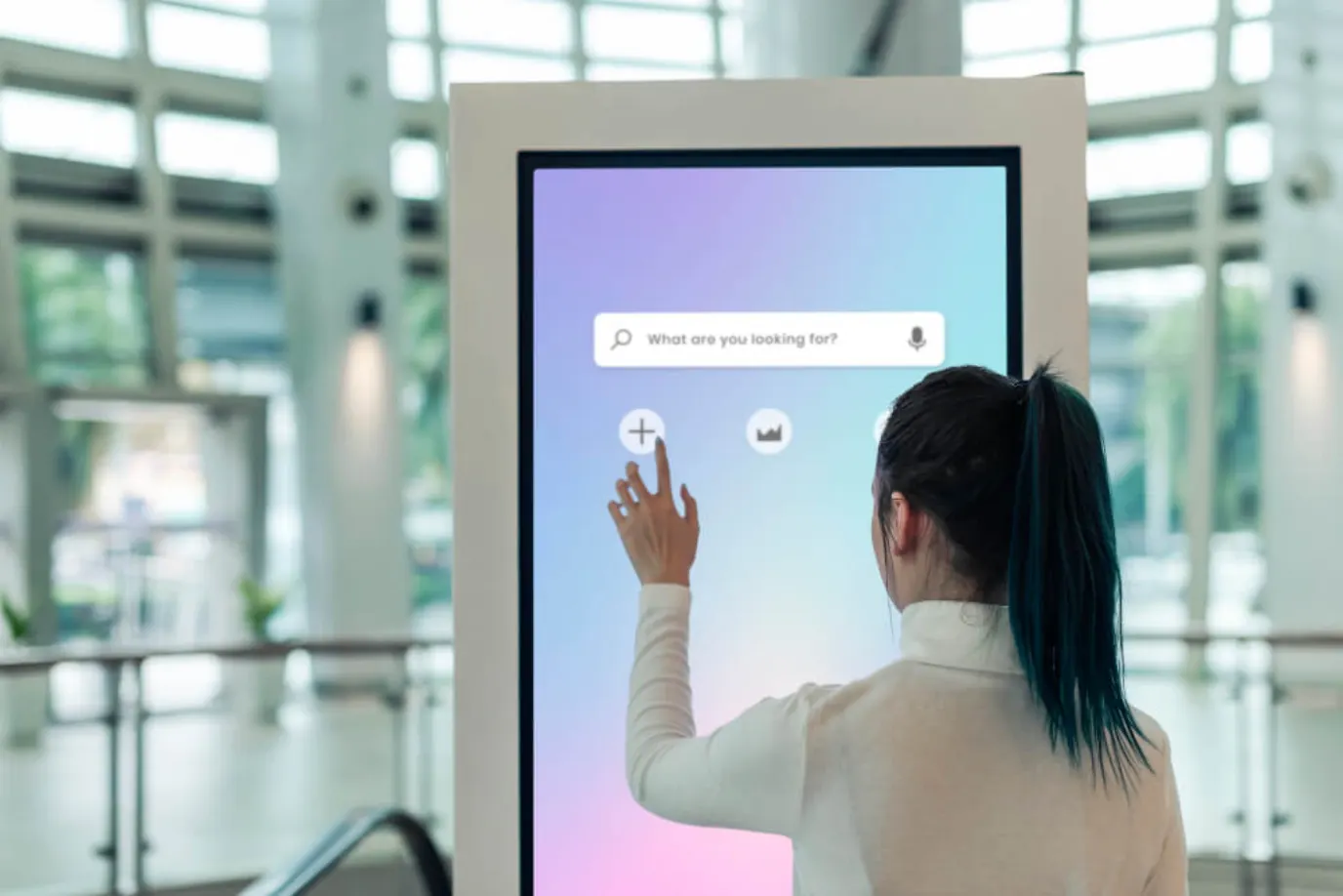
The Aiphone IX-DV is a surface-mount IP video door station. It is SIP compliant and draws 5.28 Watts on PoE (IEEE 802.3af class 0). PoE is power delivered over the network cable. SIP (RFC 3261) is the signaling that sets up a phone-style call. The AXIS A8207-VE Mk II combines a camera, a keypad, and an RFID reader (a badge or card reader) under one hood. Call recipients can see the caller and open the door from a cell phone, an IP phone, or a video management system. The 2N IP Style is a lobby panel with a 10.1'' touch display, a business directory, and SIP2.0.
A directory panel is built for visitors who must find a tenant or a suite. If every visitor already knows one company name and someone is at the glass, a call button and a smaller station handle that workflow. Tenant count, whether the panel sits on an accessible route, and how high the operable button lands matter as much as the screen. A warehouse staff door that only badge-holders use may need only a reader; decide whether staff also need an audio call button. Save the camera for the visitor entrance if nobody will look at the picture.
How do IP, analog, wireless, and app answering compare?Link to this section
IP stations take a network drop. Analog multi-tenant handsets share the maker's own two-wire cable run. DECT wireless uses radio between a door station and a master. A phone app is an answering option on top of an IP station, not a fourth kind of wire.
| Job / example | Answering method | Wiring | Lock integration to confirm |
|---|---|---|---|
| Visitor and internal calls: Aiphone IX Series | Desk master or SIP phone | Local network | Door-station contact and separate lock supply/interface |
| Tenant directory: 2N IP Style | Indoor station or My2N app | Network cable; internet for cloud calls | Passive relay and lock power |
| Visitor calls and badge entry: AXIS A8207-VE Mk II | IP phone, cell phone, or video system | Ethernet | Relay or reader connection to a door controller |
| Existing analog tenant system: Aiphone GT-1D | Tenant handset | Compatible GT bus | Release to the calling entrance |
| Short door-to-desk path: Aiphone WL-11 | Included wireless master | DECT radio between stations | Confirm the proposed lock interface separately |
Specifications for your installerLink to this section
These components do different jobs. The power column distinguishes device draw, available supply power, and maximum input; do not add them as if they were comparable operating measurements. Confirm the complete system’s power budget and lock interface before ordering.
On the 2N IP Style, plain PoE (not PoE+) drops the panel into Low Power Mode. The power-supply page says that mode is for basic configuration: display backlight is limited to 25% of available brightness, the front status LED does not run, and any module on the vbus cable does not run. Connect PoE+ or the 12 V / 4 A supply and restart if you need the full panel.
Choose analog GT hardware only when the installed bus controller is identified as a GT-BC, or the maker of the installed system confirms the station, and the installer has verified the two-conductor run is continuous end to end. Matching conductor count is not compatibility.
Choose a wired IX set when IT will give you Class 0 PoE ports and you want stations to call each other on the LAN. Aiphone's IX CallManager registration note states that IX Series stations are peer-to-peer, do not require a dedicated or cloud-based server for communication, and do not require Internet access, only a local network connection. Stations may also register to a SIP server when you want an extension on the office phone system (PBX). That optional registration is a separate setup from local calling.
Choose an IP station plus the maker's app when the person who can release the door is often off the floor and IT will allow the traffic. My2N describes a cloud calling service from a video intercom to a mobile phone or tablet. The A8207-VE Mk II supports cell-phone answering. Ask IT to check the cloud service’s internet and firewall requirements before choosing app answering.
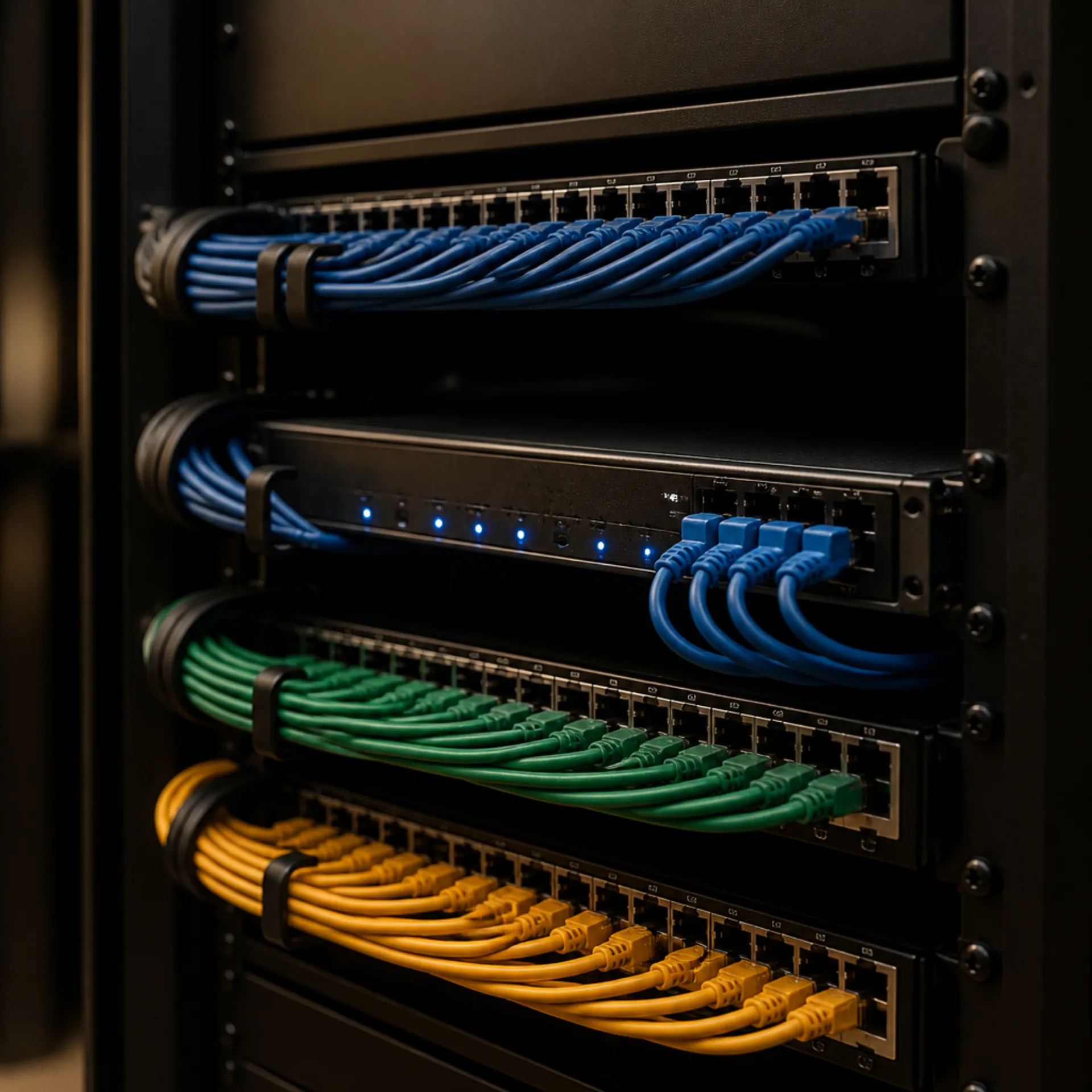
Size the switch for the port class each station lists. PoE class and watt budget belong in the same conversation as any other closet drop; the network infrastructure guide covers that network planning.
How should the station talk to the lock?Link to this section
Talk path and lock path are separate specifications. The lock, the strike, and the maglock (an electromagnet that holds the door leaf, the swinging panel) live on the Access Control & Security page. A dry contact is a switch that closes a circuit without supplying voltage. The station output is that switch, or a reader signal. It is not automatically the lock's power supply.
Read the lock datasheet for voltage, current, and load characteristics before connecting the relay. The IX-DV provides two contact outputs. Its installation manual rates the contacts at 24 VAC or 24 VDC, 1 A (resistive load). Check the lock’s load characteristics and manufacturer-required interface or protection; matching voltage and current alone does not establish compatibility. The 2N IP Style passive switch is an NO/NC contact up to 30 V / 1 A AC/DC. The A8207-VE Mk II lists two relays, and its reader connector can present Wiegand or RS485. Axis also offers a Wiegand-to-OSDP converter as a separate accessory. Confirm the reader protocol the proposed firmware and door controller support before specifying a converter.
An electric strike holds the latch. A maglock holds the leaf. Either one may be switched by the station or by a door controller the station only signals. Switching is not the same as feeding lock power. If the lock needs a dedicated supply, the station relay only tells that supply when to release.
Have the local building official decide the permitted lock arrangement for your occupancy, working with the fire marshal and your door-hardware and fire-alarm contractors. For a delayed-egress design, ask which delayed-egress provisions apply to your occupancy under the International Building Code's delayed-egress provisions (as adopted locally, with amendments). A model-code example does not establish the requirements at your address.
Delayed-egress locks and other electromagnetic locks on exit doors require different design decisions. Have the fire-alarm contractor specify and test the required alarm and power-loss release behavior. Do not treat the intercom relay as the fire-release circuit.
Who answers, who gets paged, and what happens on a miss or an outage?Link to this section
Pick the answering point before you pick the brand. A desk master works when someone is there. A SIP extension on the office PBX works when the receptionist already lives on a handset. A phone app works when the person who can release the door is in a meeting or in the warehouse. Name a backup person and the hours each path is live.
Paging is a third job. Aiphone's IX door-station install sheet includes an audio output to a paging amplifier. Use that for "visitor at the dock" over floor speakers. The IX-MV7 can also make live pages to all stations in its directory or to 50 predefined groups, with announcements limited to 10 minutes. Do not use paging as the only way to identify a stranger at the front glass. Have the fire-alarm contractor specify the system used for required evacuation announcements. Do not treat a door station as the fire alarm.
Configure and test the backup destination. The IX-MV7 can transfer an incoming call immediately (Absent Transfer), after a programmed delay of 1-300 seconds (Delayed Transfer), or on a time-of-day schedule. Write the backup destination into the program before handover.
Outage behavior depends on the path you chose. IX Series local calling does not require Internet access. The IX-MV7 can monitor the line to each station in its address book and alert if a station goes offline. App answering over My2N needs a working internet path at the intercom and at the phone. If IT will not allow that traffic, keep the answer on a desk station or a local SIP PBX. Do not assume the intercom keeps talking after the lock's power is cut; those are separate circuits unless the drawing says otherwise.
Name the administrative owner. Someone has to hold the system configuration, the tenant directory, and any My2N subscription. Before you sign off, have the installer place a call from each door, answer from each listed point, release the lock from each of those points, and force a missed call so the transfer actually rings. Walk the fire-alarm contractor through any lock that must drop on alarm.
What does ADA require at an entrance intercom?Link to this section
In the 2010 ADA Standards, section 230 applies where a two-way communication system is provided to gain admittance to a building or facility or to restricted areas within one. Those systems must comply with section 708. The Access Board guide on entrances uses the same admittance scope. Room-to-room masters that are not used for admittance sit outside that scoping sentence.
Section 708 requires both audible and visual signals. If a handset is provided, the cord must be 29 inches (735 mm) long minimum. The Access Board advisory on 708.1 says devices that do not require handsets are easier to use by people who have a limited reach.
At an accessible entrance, the call button is an operable part. Section 308.2.1 sets an unobstructed forward reach of 48 inches (1220 mm) maximum and 15 inches (380 mm) minimum above the floor. Section 309 requires operable parts within the applicable reach ranges, operable with one hand, without tight grasping, pinching, or twisting of the wrist, and with 5 pounds (22.2 N) maximum activating force. Measure the mounted button, including any stall or vestibule obstruction.
The A8207-VE Mk II has an induction loop for hearing aids. It does not replace the audible-plus-visual rule in 708.
What should you have ready before anyone quotes?Link to this section
A proposal needs the lock, the answer path, the backup path, and the administrative owner, not only a station model.
- Every entrance or room that will get a station: visitor lobby, suite door, dock, internal office, stair, parking. Mark which openings are required exits.
- The jobs on each station: entrance call, room-to-room call, page, or a mix. Who answers each job, by hour, and who is the backup.
- Door hardware already on the leaf: mechanical lock, electric strike, maglock, delayed egress, or "we do not know." Photograph the closer side and the latch.
- How the fire alarm talks to those locks today. If you cannot answer, the fire contractor has to join the survey.
- Network: a PoE drop at each wired station, switch class (802.3af vs 802.3at), and whether IT will allow SIP or a maker app off the LAN. For DECT, the measured door-to-master path against the 330 foot listing.
- Power that is not PoE: a 24 V GT-BC bus, the 12 V / 4 A supply a 2N IP Style needs if the switch cannot do PoE+, or lock power sized from the lock datasheet.
- Directory and mounting: one company name or a searchable tenant list; whether the entrance is on an accessible route; handset or hands-free; check button height, clear floor space, and any obstruction against the applicable forward- or side-reach requirements.
- Handover tests you will require: call from each door, answer from each listed point, lock release from each of those points, a forced missed-call transfer, and a fire-contractor walk-through of any lock that must drop on alarm. Name who owns programming and any cloud-calling subscription.
Digitalholics offers Access Control & Security and Network Infrastructure from the Plano office. We were founded in 2015. Work starts with a complimentary phone consultation. If you want a written, line-item proposal for a named entrance, begin on the Access Control & Security page and bring the checklist.
SourcesLink to this section
- Aiphone IX-DV product page
- Aiphone IX Series technical brochure
- Aiphone IX Series CallManager registration note
- Aiphone IX Series door-station installation manual
- Aiphone GT-1D product page
- Aiphone WL-11 wireless video intercom set
- 2N IP Style technical parameters
- 2N IP Style power supply
- 2N My2N App
- AXIS A8207-VE Mk II product page
- AXIS A8207-VE Mk II help (connectors, PoE classes, SIP)
- IETF RFC 3261, Session Initiation Protocol
- U.S. Access Board, ADA Chapter 7 (section 708)
- U.S. Access Board, ADA Chapter 3 (sections 308 and 309)
- U.S. Access Board, entrances, doors, and gates guide
- U.S. Department of Justice, 2010 ADA Standards
- International Code Council, model-code means-of-egress training
Complimentary phone consultation
Ready to scope it for your space?
A complimentary phone consultation is the first step: what the room or floor has to do, who uses it, and when it has to be live. Then a written, line-item proposal — no obligation.
No obligation · We aim to respond within one business day