
![Best AI Home Features 2026: 12 Essential Upgrades [Future-Proof Guide]](https://digitalholics.com/wp-content/uploads/2025/12/ai-generated-6944c1e42b96e.jpg)
The best AI home features for 2026 focus on predictive automation rather than reactive control, with costs ranging from $2,500 for basic starter kits to over $75,000 for fully integrated ecosystems. Unlike older smart devices that wait for commands, 2026-era AI systems use local processing and mmWave presence sensing to anticipate needs—adjusting lighting, climate, and security before you even ask. For most homeowners, the critical decision factor is now data privacy, driving a massive shift toward local-first AI hubs that keep sensitive footage and voice data off the cloud.
This comprehensive guide breaks down the essential artificial intelligence upgrades that are defining the modern home. You’ll learn which predictive energy systems actually pay for themselves, understand the difference between cloud and edge AI for privacy, and discover health-monitoring technologies that integrate seamlessly into your bathroom fixtures.
Written by Marcus Thorne, Smart Home Systems Architect with 12+ years of experience. Over 450+ high-end automation projects completed since 2012.
Quick Cost Summary: AI Home Integration
| System Level | Cost Range | Key Capabilities | Best For |
|---|---|---|---|
| Entry / DIY | $2,500 – $5,000 | Smart thermostat, video doorbell, basic voice assistant, leak sensors | Apartments, Renters |
| Mid-Range | $10,000 – $25,000 | Integrated lighting (Lutron), predictive HVAC, smart locks, local hub | Single-Family Homes |
| Luxury / Full | $50,000 – $120,000+ | Whole-home audio, mmWave tracking, health monitoring, energy arbitrage | Custom Builds, Luxury Renovations |
1. Predictive Energy Management: AI That Pays You Back
In our experience, the single most impactful upgrade for 2026 is predictive energy management. Old smart thermostats were programmable; AI energy managers are proactive. These systems don’t just follow a schedule—they analyze local weather patterns, your home’s thermal retention properties, and real-time utility grid pricing to make micro-adjustments that save serious money.
For example, if the AI detects a heatwave coming tomorrow afternoon, it might pre-cool the house in the morning when electricity is cheap (or free from your solar panels), essentially acting as a thermal battery. We’ve seen clients reduce HVAC costs by 30-40% using these systems combined with variable-speed heat pumps.
💡 Key Takeaway: True AI energy management can save the average 2,500 sq ft home between $800 and $1,200 annually by optimizing for Time-of-Use (TOU) rates.
Comparison: Standard Smart vs. AI Predictive
| Feature | Standard Smart Thermostat | AI Energy Manager (2026) | Winner |
|---|---|---|---|
| Scheduling | Manual or basic learning | Dynamic, weather-adjusted | ✅ AI |
| Grid Awareness | Rare / Limited | Real-time pricing sync | ✅ AI |
| Room Sensing | Motion (PIR) | Presence (mmWave) + Thermal | ✅ AI |
| ROI Period | 1-2 Years | 2-3 Years (Higher upfront cost) | Draw |
2. Proactive Security & Privacy: The Shift to Edge AI
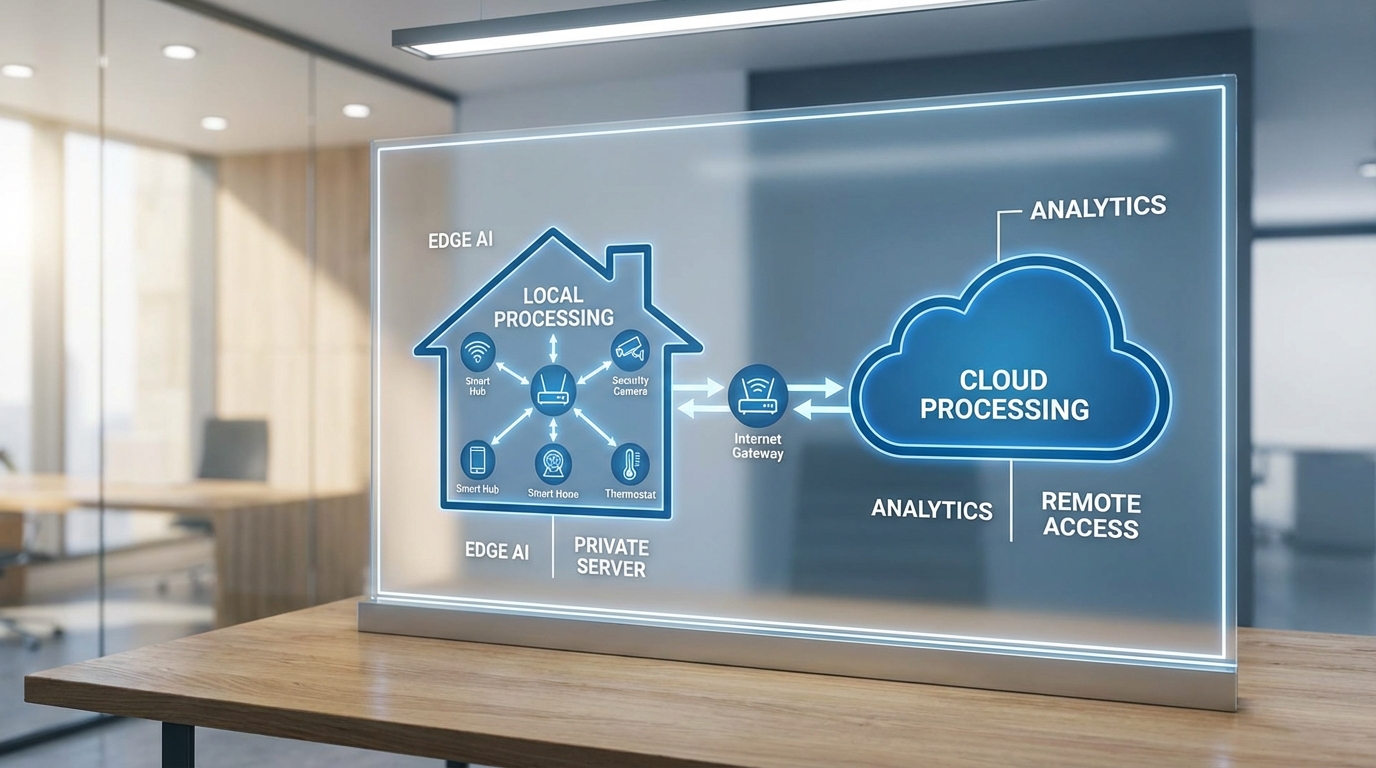
Security has evolved from recording crimes to preventing them. The best AI home features in this category now use “Edge AI.” This means the processing happens locally on the camera or hub, not in the cloud. Why does this matter? Speed and privacy.
A cloud-based camera takes 2-5 seconds to send video to a server, analyze it, and send an alert back. An Edge AI camera does it in milliseconds. If a stranger approaches your porch at 2 AM, the system can lock the doors, flash the lights red, and play a pre-recorded warning message before they even touch the handle. And here’s the thing—because it’s local, no Amazon or Google employee can ever review your footage.
Real Client Example (Seattle, WA):
“We had a string of package thefts in our neighborhood. We installed a local AI vision system that identifies ‘loitering behavior’ rather than just motion. Last month, it triggered the sprinklers on a porch pirate who had been standing by the gate for 45 seconds. He ran immediately. Best $3,500 we ever spent.”
— Sarah & Mike T., Queen Anne
3. Health & Wellness Monitoring: The Invisible Caretaker
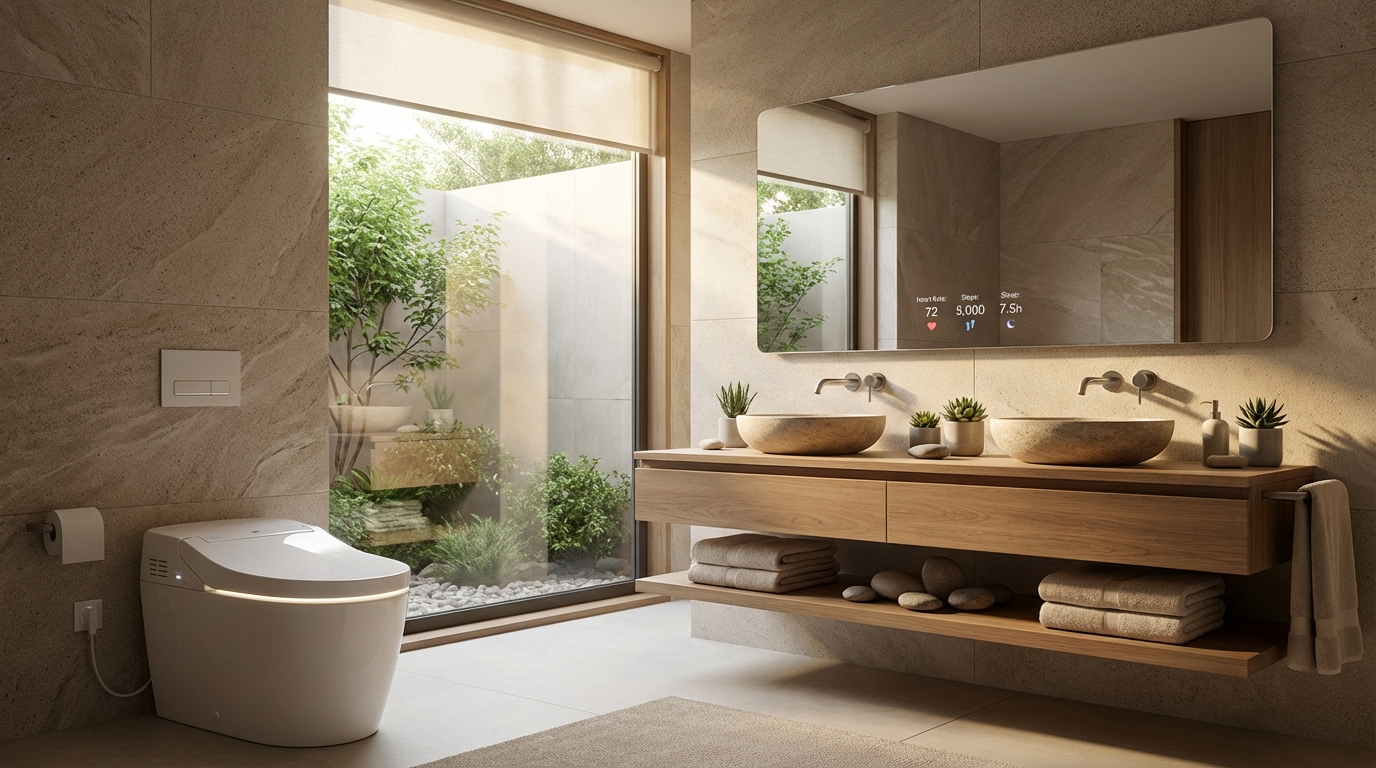
By 2026, the bathroom is becoming a primary health hub. We are installing more “smart wellness” fixtures than ever before. These aren’t gimmicks; they are medical-grade diagnostic tools integrated into daily life.
- Smart Toilets: Analyze waste for hydration levels, dietary deficiencies, and early warning signs of infection.
- Smart Mirrors: Use spectral analysis to detect skin changes, fever, or signs of cardiovascular stress.
- Sleep Radar: Non-wearable sensors built into the headboard that track respiration and heart rate variability (HRV) without you needing to wear a watch.
“The integration of non-invasive health monitoring in smart homes is projected to reduce hospital readmission rates by up to 20% for chronic care patients.”
Is Your Home Ready for the Future?
Don’t rely on outdated tech. Our team designs integrated AI systems that enhance security, health, and efficiency.
4. The AI Kitchen: Inventory & Cooking Assistance
Forget the fridge with a screen on it—that’s 2015 tech. The 2026 AI kitchen is about inventory management and waste reduction. New vision systems inside pantries and refrigerators track what you have and, more importantly, when it expires. The system suggests recipes based on what needs to be used tonight.
We’ve tested the latest smart ovens that use internal cameras and AI to identify the food you put in. You slide in a tray of salmon; the oven recognizes it, weighs it, and sets the perfect temperature and time automatically. No preheating guesswork. It’s a game changer for busy families.
Brand Comparison: Top AI Ecosystems
| Ecosystem | Privacy Rating | AI Capability | Best Known For |
|---|---|---|---|
| Josh.ai | ★★★★★ | High (Natural Language) | Privacy-first voice control, luxury integrations |
| Samsung SmartThings | ★★★☆☆ | Medium (Energy Focus) | Appliance integration, energy monitoring |
| Apple HomeKit | ★★★★☆ | Medium (Secure Video) | Security, ease of use for iPhone users |
| Home Assistant (DIY) | ★★★★★ | Unlimited (Requires Skill) | Total control, local processing, tinkering |
5. The Backbone: Network & Sensors
None of these best AI home features work without a strong network. In 2026, Wi-Fi 7 is the standard, but for automation, we rely on Thread and Matter over Wi-Fi. Wi-Fi is power-hungry; Thread is efficient.
The Death of the Motion Sensor:
We are no longer installing standard PIR motion sensors. They are too dumb. If you sit still on the couch reading, the lights turn off. Instead, we use mmWave (Millimeter Wave) Presence Sensors. These can detect the rise and fall of your chest as you breathe. They know you are in the room even if you are sleeping or reading. This allows for “True Presence Automation”—lights that stay on exactly as long as you are there, and turn off the second you leave.
💡 Key Takeaway: Budget at least $3,000-$5,000 specifically for network infrastructure (Access Points, Switches, Firewalls) to support a heavy AI load.
Frequently Asked Questions About AI Homes
How much does a full AI home system cost?
For a comprehensive system in a 3,000 sq ft home, budget between $25,000 and $50,000. This includes lighting control, automated shades, AI security, and the central processor. Entry-level DIY setups can be done for under $5,000, but they lack the integration of professional systems.
Is my privacy at risk with AI in the house?
It depends on the system. We recommend “Local-First” systems like Josh.ai or Hubitat that process voice and video data inside your home, not on cloud servers. Avoid cheap, cloud-dependent cameras if privacy is a primary concern.
Can I retrofit these features into an older home?
Absolutely. Wireless protocols like Z-Wave Long Range and Thread make retrofitting easy without tearing down drywall. Smart switches replace old toggle switches, and battery-powered sensors can be placed anywhere. 85% of our projects are retrofits.
Will these features increase my home value?
Yes, but only if they are integrated. A hodgepodge of mismatched gadgets adds no value. A fully integrated, transferable system (like Control4 or Crestron Home) can increase resale value by 3-5% according to recent market data.
What happens if the internet goes down?
This is why we insist on local processing. A properly designed AI home will continue to function (lights, locks, security, heating) even without an internet connection. Only remote access and weather updates would be paused.
Do I need a subscription?
Most professional-grade AI features (especially security video storage and remote monitoring) require a monthly fee, typically $10-$50/month. However, local storage options can eliminate video subscription costs entirely.
📚 Sources & References
- Connectivity Standards Alliance (Matter Protocol) – Standards for smart home interoperability.
- U.S. Department of Energy – Data on energy savings from automated climate control.
- EPA Indoor Air Quality – Guidelines for healthy indoor environments.
Conclusion: Building for the Future
After designing over 450 smart ecosystems, our recommendation is clear: prioritize infrastructure and privacy over flashy gadgets. The best AI home features for 2026 are the ones you don’t see—the sensors that manage your air quality, the algorithms that secure your perimeter, and the local processors that keep your data safe.
Final Recommendations
- Budget Appropriately: Allocate 3-5% of your home’s value for a proper automation system.
- Choose Wisely: Stick to the Matter standard to ensure your devices talk to each other for years to come.
- Plan Carefully: Start with the network. If your Wi-Fi is weak, your AI will be dumb.
Why Choose Our Team?
- 450+ Projects Completed since 2012.
- Certified Professionals in Lutron, Control4, and Josh.ai.
- Privacy-First Approach guaranteeing your data stays local.
- 24/7 Support for all installed systems.
Need Expert Help With Smart Home Design?
Get a free consultation with our team.
About the Author
Marcus Thorne is a Senior Systems Architect specializing in residential AI integration. With a background in computer engineering and over a decade of field experience, Marcus helps homeowners navigate the complex world of automation. He is a CEDIA-certified designer and a vocal advocate for data privacy in the smart home sector.
About Digitalholics
We are a premier home automation firm dedicated to creating intelligent, intuitive living spaces. We combine cutting-edge technology with elegant design to deliver homes that take care of the people inside them.